01234 324 530

Why care homes need to prepare now, and the practical steps providers should take to protect vulnerable residents.
The government's updated Be Ready campaign, launched in October 2026, encourages UK households and organisations to plan how they would manage for 72 hours if essential services such as electricity, water, heating, communications or transport were disrupted. It is not a warning that a nationwide blackout is imminent, but it is a timely reminder to be prepared.
For care homes, this matters more than most. Residents may depend on powered medical equipment, electronic medication systems, heating and lighting. A prolonged power cut could pose serious risks, especially for older people, those living with dementia, people with limited mobility and residents with complex medical needs.
Providers should review their emergency procedures now to protect residents' safety, dignity and wellbeing throughout any disruption. In this blog, we will provide essential advice for how to keep residents safe in the event of a power outage.
Review Your Emergency and Business Continuity Plans
Start by reviewing your existing plans. Arrangements built for a short power cut may not hold up for 72 hours.
Plans should clearly set out:
- Who leads the response.
- What happens if heating, lighting, water or cooking facilities fail.
- When evacuation would be necessary, and what alternative accommodation is available.
- How staff will communicate if phone and internet services are down.
- How residents using specialist medical equipment will be supported.
- How essential care will continue
Make sure every member of staff, including night and weekend teams, knows their role. An emergency briefing is a good way to walk everyone through the procedures and show them where supplies and equipment are kept.
Ensure Emergency Lighting and Backup Power Are Available
Loss of lighting is one of the most immediate concerns. Dark corridors, stairs and communal areas raise the risk of falls, particularly for residents with dementia, visual impairments or mobility difficulties. Care homes should:
- Check emergency lighting systems are working.
- Keep battery torches and spare batteries throughout the building.
- Make sure emergency exit routes are clearly identifiable.
- Check essential equipment has battery backup.
- Give staff portable lighting for night-time care.
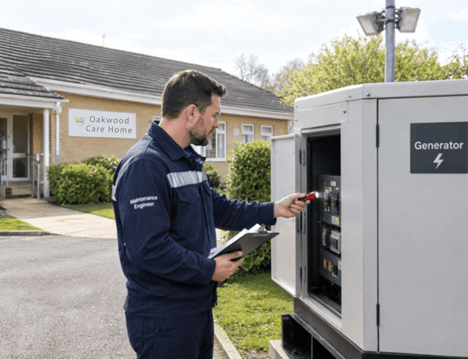
Where possible, consider a backup generator. Generators must be professionally installed, maintained and run in line with manufacturer instructions and fire safety rules. Never operate them indoors or in enclosed spaces because of the risk of carbon monoxide poisoning.
If you already have a generator, check its fuel, servicing records and reliability. Identify which equipment needs priority power rather than assuming it will run the whole building.
Protect Residents Who Depend on Medical Equipment
For some residents, a power cut is a direct medical risk. Oxygen concentrators, specialist mattresses, hoists, suction machines and some monitoring devices need electricity. Managers should assess each resident who relies on this equipment by:
- Identifying every resident who uses powered medical equipment.
- Checking whether it has an independent battery, and how long that lasts.
- Making sure staff can operate it manually or use alternatives where clinically appropriate.
- Agreeing contingency arrangements with equipment providers and healthcare professionals.
- Identifying who may need urgent transfer if backup power can't be maintained.
Residents using oxygen should have an agreed plan with their supplier and clinical team. Don't wait for a power cut to find out what won't work without mains power.
Medication also needs reviewing, as some medicines need refrigeration and electronic administration systems may go down. Make sure that essential medication records and current administration information are available on paper. Ensure any temperature-sensitive medicines are stored appropriately, with pharmacist advice if refrigeration fails and that medication supplies are sufficient and well managed.
Food, Water and Catering Arrangements
A three-day outage could disrupt cooking, food storage and hydration. Plan how you would provide three days of suitable meals without normal catering facilities, including:
- Non-perishable food and ready-to-eat meals that need no cooking.
- Enough drinking water.
- Manual tin openers and other non-electric equipment.
- Provision for dietary requirements, allergies and cultural preferences.
- Nutritional supplements and specialist dietary products.
Government guidance recommends around 3 litres of drinking water per person per day. Care homes should calculate this for all residents and staff, plus extra for food preparation, medication and hygiene. A 30-resident home, for example, needs at least 270 litres for residents alone over 72 hours.
Food safety is particularly important. The Food Standards Agency advises that an unopened fridge may stay cold for about four hours, and a full freezer for up to 48 hours. Monitor temperatures, keep doors closed as much as possible and have clear procedures for disposing of unsafe food.
These household timings are only a guide. Follow your own food safety management system and seek advice from your local authority food safety team if needed.
Heating, Warmth and Temperature Control
Older people are especially vulnerable to the cold, so losing heating in winter can quickly become serious. Care homes should prepare by:
- Keeping plenty of blankets, warm clothing and layers available.
- Identifying the warmest areas of the building.
- Monitoring room temperatures regularly.
- Keeping windows and external doors closed, and using curtains to reduce heat loss.
- Being sure to prioritise residents most vulnerable to the cold.
In warmer weather the risk is overheating, so plan how to keep residents cool without ventilation or cooling systems.
Residents with dementia may not recognise or say when they are too hot or cold, so staff should carry out regular welfare checks and watch for changes in behaviour or condition.

Maintain Hygiene, Personal Care and Infection Prevention
Water supplies can also be affected, particularly in buildings that rely on electric pumps. This can make toileting and continence care, handwashing, bathing, cleaning, laundry and infection prevention much harder.
Keep emergency supplies of: Hand sanitiser and antibacterial cleaning products. Disposable gloves and aprons.
Wet wipes and continence products.
Disposable bags and essential cleaning materials.
Put alternative arrangements in place for waste management and hygiene. Give particular thought to residents needing regular continence support, catheter care or other specialist personal care. Dignity must stay central, and residents should continue to receive appropriate personal care even when normal facilities are unavailable.
Staffing Levels and Communication
Staff may struggle to get to work if transport is disrupted or travel is unsafe. To maintain safe staffing, managers should:
- Identify staff who live locally.
- Set up emergency contact arrangements and contingency rotas.
- Identify employees who can provide extra cover.
- Make sure food, drinking water and basic facilities are available for staff.
- Agree how to communicate if mobile and internet services fail.
Keep a paper list of essential numbers somewhere accessible, covering emergency services, the local authority, healthcare professionals, pharmacies, utility providers, equipment suppliers and residents' relatives. Battery-powered or wind-up radios will let staff hear official updates if internet and TV services go down.
Supporting Residents with Dementia and Additional Needs
Losing familiar lighting, TV, equipment and routines can cause confusion, anxiety and agitation for residents living with dementia. Staff should be ready to offer extra reassurance and emotional support by:
- Keeping daily routines as familiar as possible.
- Explaining what's happening in simple, reassuring language.
- Providing extra supervision where needed.
- Using battery lighting to keep surroundings familiar.
- Offering familiar activities that don't need electricity.
- Supporting residents with communication difficulties.
- Monitoring anyone who becomes distressed.
Keep families informed, especially if disruption looks set to continue. The aim is a calm environment where no resident feels frightened or abandoned.
When Should a Care Home Consider Evacuation?
Evacuation shouldn't be the automatic first response. Moving elderly and vulnerable residents carries its own risks, especially for those with dementia, limited mobility or complex needs. But staying may become unsafe if there is:
- No way to keep essential medical equipment running.
- Loss of heating in dangerously cold conditions.
- Not enough drinking water.
- An inability to maintain essential hygiene and sanitation.
- Insufficient staff to provide safe care.
- A building made unsafe by fire, flooding or other hazards.
Keeping Families Informed and Reassured
Relatives may worry if they can't reach the home because phone and internet services are down. A clear communication plan should explain how updates will be shared and what families can expect.
Encourage families to make sure the home has their up-to-date contact details and understand the home's emergency arrangements. They should also avoid unnecessary visits if travel is unsafe and use agreed alternative channels to get in touch where available.
Good communication maintains trust and reassures relatives that their loved ones are being well cared for. Use this checklist when reviewing your care home’s emergency preparedness.
Final Thoughts: Preparation Today Can Prevent a Crisis Tomorrow
A potential 72-hour outage shows how much modern care depends on electricity and the infrastructure behind everyday life. An extended power failure would be challenging for any care home, but good preparation can reduce many of the risks.
Don't wait for an emergency to review your arrangements. Assess your building, equipment, staffing and supplies now, and make sure every member of staff knows what is expected of them. Above all, keep residents at the center of every decision: their safety, dignity, comfort and wellbeing must remain the priority, whatever the circumstances.
Being prepared is not about creating unnecessary alarm. It is about taking responsibility, planning ahead and ensuring that the people who depend on you continue to receive the care and protection they deserve.
Useful Guidance and Resources
• UK Government – Be Ready: Power cuts and emergency preparedness
• Care Quality Commission: CQC – Guidance for providers
• GOV.UK – Adult social care cold weather guidance: Supporting vulnerable people before and during cold weather
• Food Standards Agency: Food safety during a power cut
• British Red Cross: Power cuts – how to prepare and stay safe
Editorial note: The government's three-day preparedness campaign is general resilience advice, not confirmation that a national power outage is expected. Care homes should follow any specific instructions from their local authority, electricity network operator and emergency services.